 Bryan Forester
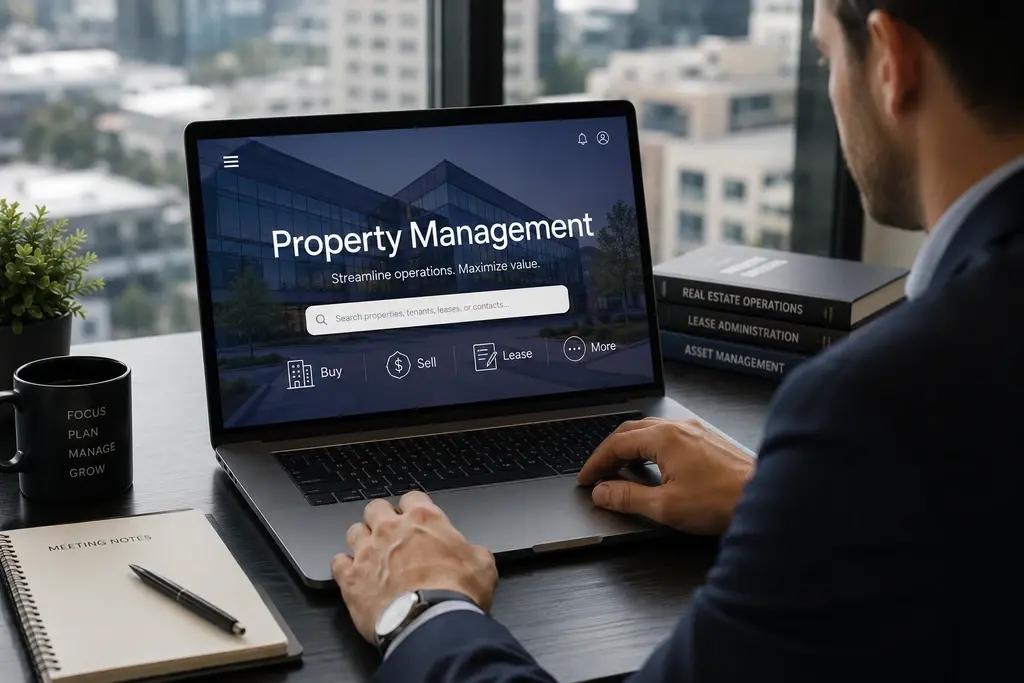
A property management and real estate platform is software built to run the operational side of commercial real estate: properties, tenants, leases, deals and the reporting that ties them together, in one system instead of five. Most CRE firms did not choose to run on spreadsheets and disconnected tools. They grew into it, one new hire and one new property type at a time, until the buyer list lived in one place, the lease dates lived in another and nobody had the full picture.
That gap is why the category has split into two layers. Traditional property management software runs the asset side: work orders, tenant billing, maintenance schedules. Integrated CRE operating platforms sit on top of that and connect the brokerage side: contacts, deals, marketing and the AI that ties activity back to relationships. Property management is one piece of a larger, connected brokerage ecosystem. We cover that full picture in our guide to the Commercial Real Estate Platform.
This piece breaks down what these platforms actually do, the features worth paying for, how to evaluate one and where AI is genuinely changing the operational side of the business, for sale and lease teams alike.
What Is a Property Management and Real Estate Platform?
A property management and real estate platform is software that runs the operational and brokerage side of commercial real estate, from tenant and deal records to reporting, in one connected system instead of scattered spreadsheets and tools.
Definition and Core Purpose
A property management and real estate platform centralizes the day-to-day operations of running commercial property and the deals tied to it, replacing a patchwork of spreadsheets, inboxes and single-purpose tools with one connected system. At its core, it exists to cut manual administrative work and give owners, managers, brokers and leasing teams the same view of what is happening across a portfolio or a pipeline, instead of five partial ones.
Core Features Typically Included
Most platforms in this category combine a property and tenant database, lease tracking, maintenance coordination, document storage and financial reporting on the asset management side with CRM, workflow automation and increasingly AI-driven insight on the brokerage side. Which of those a firm actually needs depends on which side of the business is asking: an asset manager needs the former, a broker needs the latter and larger firms often need both to talk to each other.
How Commercial Platforms Differ from Residential Software
Commercial platforms are built for a different level of complexity than residential tools. Multi-property portfolios, layered lease structures, investment reporting and broker collaboration across a deal team are standard requirements in CRE, not edge cases. Enterprise scalability and pipeline visibility across office, retail, industrial and multifamily assets matter here in a way that a single-unit residential tool was never designed to handle.
Why Commercial Real Estate Firms Need an Integrated Platform
CRE firms need an integrated platform because disconnected tools cost time and accuracy at every handoff, from an outdated buyer list to a lease deadline nobody flagged.
Operational Challenges Without Modern Software
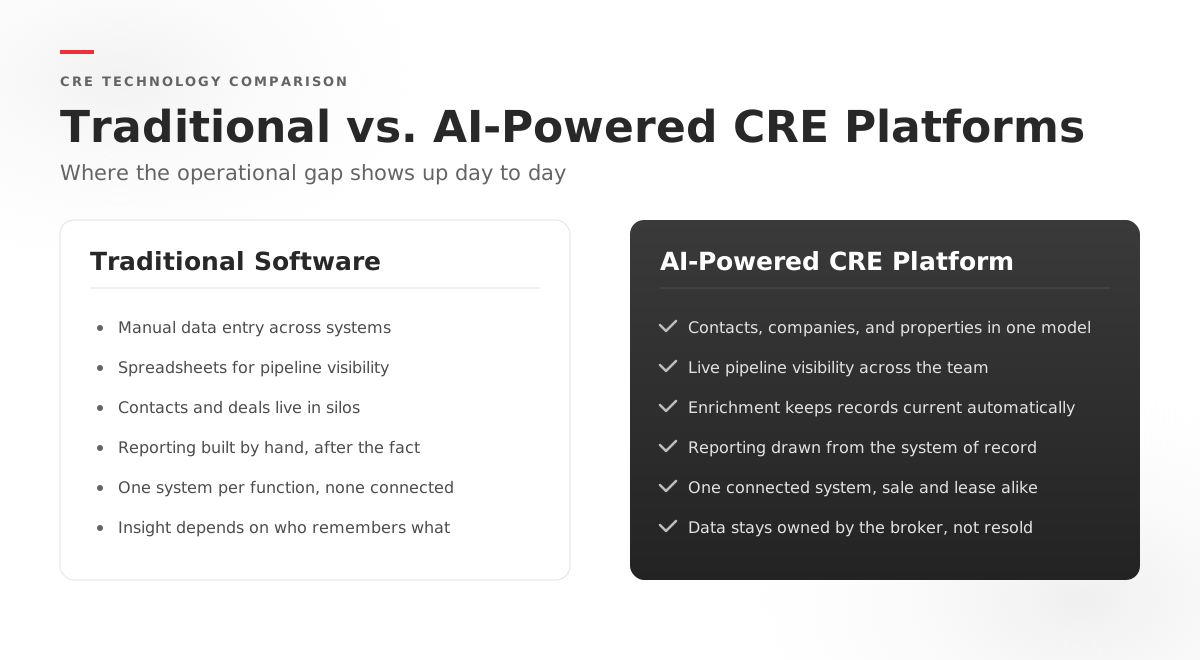
Firms running on disconnected systems lose time to the same handful of problems: a buyer list that forked into three conflicting spreadsheet versions, a CRM that does not talk to the email tool, lease deadlines tracked in someone's calendar instead of the system of record and duplicate data entry every time a deal moves stage. Reporting visibility suffers most, because nobody can pull a clean answer without asking three people first. These are not new complaints. Teams at Colliers, where Duxre's founder leads a capital markets group, experienced this exact pattern firsthand. Those experiences later led to the development of Duxre's software to address it.
Business Benefits of an Integrated Platform
An integrated platform's value shows up in speed and accuracy: faster decision making because the data is already assembled, less administrative work because it is not being re-entered across four tools and stronger reporting because the system, not a spreadsheet, is the source of truth. Teams collaborate better when everyone is looking at the same record instead of their own export of it and forecasting improves because the pipeline data behind it is current rather than reconstructed at quarter-end.
What This Looks Like in Practice
Picture a brokerage team handling a mixed portfolio: two office buildings, a retail center and an industrial asset, each with its own leasing timeline and its own set of tenant relationships. Run separately, that means four spreadsheets, four inboxes and a broker team that spends more time reconciling data than working deals. Connected in one platform, the same team sees every contact, every property and every open deal in one place and marketing, tenant communication and reporting draw from that single record instead of four different ones.
Key Features to Look for in a Commercial Real Estate Platform
The features that matter most connect CRM, deal management, marketing, reporting, and AI around the same data instead of treating each as its own silo.
CRM and Contact Management
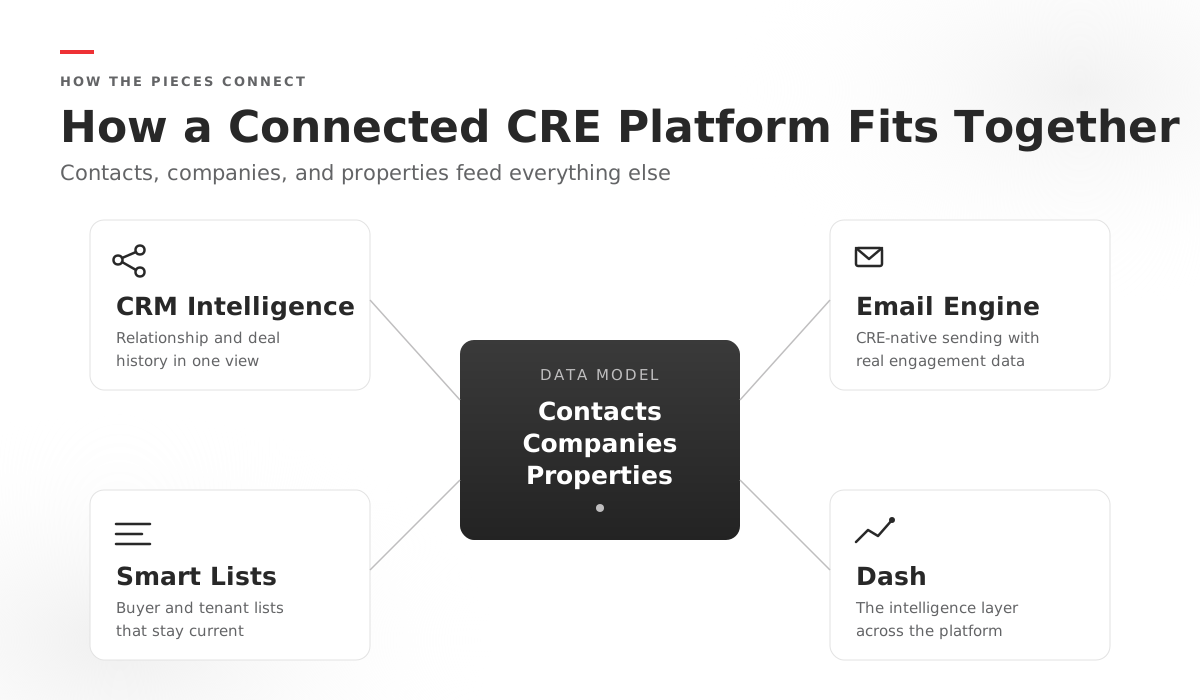
The strongest CRE platforms build their CRM around contacts, companies and properties as connected records rather than a flat list of names. Duxre's CRM Intelligence works this way: investor, owner and tenant relationships stay tied to the deals and properties they belong to and contact and company enrichment keeps those records current without a broker updating them by hand.
Deal and Lease Management
On the deal side, a platform earns its place by giving a team live pipeline visibility, both investment sales offer tracking and leasing deal stages, instead of a spreadsheet someone updates after the fact. Duxre's Smart Lists keep buyer lists and tenant requirement lists current as a deal moves, so the list a broker is working from is the same one the rest of the team sees.
Marketing and Lead Intelligence
Marketing in CRE lives or dies on reach and follow-up, for both an offering memorandum going to a buyer list and a space flyer going to tenant reps. Email Engine handles CRE-native sending with real engagement data behind it, so a broker knows who opened an OM and who is worth a follow-up call instead of guessing. Listings distributed through Data to Deals, the Duxre Marketplace also rank on the first page of Google for their property searches, which extends reach beyond a firm's own list.
Workflow Automation
Across the category, automation is meant to remove the repetitive parts of the job: reminders, routing and the small follow-ups that fall through when a broker is juggling twelve deals at once. Dash is the intelligence layer running across the Duxre platform, built as what the system becomes rather than a chatbot bolted onto the side of it.
Reporting and Analytics
Reporting needs differ by role. Asset managers want occupancy and portfolio performance; brokerage leadership wants pipeline health and broker productivity. What matters most in choosing a platform is whether reporting comes straight from the system of record or gets rebuilt by hand every time someone asks for it.
AI Capabilities
AI in this category is moving from a bolted-on feature to something closer to how a whole platform reasons about the data already in it: which contacts to prioritize, which properties are heating up, which follow-up matters this week. That is the direction Dash is built for, an intelligence layer across the platform rather than a separate tool a broker has to remember to open. AI does not replace a broker's read on a relationship or a market. It removes the busywork standing between a broker and that judgment call.
Best Practices for Selecting the Right Property Management Platform
Choosing the right platform comes down to matching it against actual business needs, integration requirements, and growth plans rather than a generic feature checklist.
Assess Your Business Needs
Start with what the firm actually runs, not what the vendor is selling. Brokerage size, property types across the portfolio, team structure and growth plans should shape the requirements list before any demo gets booked.
Prioritize Integration
A platform that does not talk to email, calendar, marketing, accounting and document storage just adds a sixth tool to the pile instead of replacing the other five. Ask about API support directly and ask what breaks when a firm tries to connect its existing stack.
Evaluate User Experience
Onboarding time, mobile access, role-based permissions and dashboard customization decide whether a team actually adopts a platform or quietly goes back to spreadsheets within a quarter. A short learning curve is not a nice-to-have here, it is the difference between adoption and shelfware.
Consider Future Scalability
A platform chosen for today's headcount and portfolio should still make sense at twice the size. Multi-office support, room to expand automation and AI capabilities that improve with more data all matter more once a firm is growing than they did on day one.
Questions to Ask Before Choosing a Platform
Before signing, a firm should get direct answers to a short list of questions: Does it support commercial properties specifically, not adapted residential tools? Can workflows actually be automated, or is that a roadmap promise? Is CRM included or a separate purchase? How easily can a team collaborate inside it? How is data secured and who owns it once the contract ends? Is reporting customizable to how this specific team works? What support exists after the sale?
How AI Is Transforming Property Management and Commercial Real Estate Platforms
AI is transforming this category by removing repetitive administrative work and surfacing insight that used to require a dedicated analyst, without replacing broker judgment.
Automating Routine Operations
The clearest AI wins in CRE right now are the unglamorous ones: document organization, reminder systems and communication workflows that used to depend on someone remembering to do them. None of that requires a broker to change how they sell or lease, it just removes the parts of the job that were never the valuable part to begin with.
Smarter Decision Making
Where AI adds more than convenience is in pattern recognition across a portfolio or pipeline: which properties are showing renewed interest, which leads deserve priority this week, which trends in occupancy or deal velocity are worth a closer look. That kind of insight used to take an analyst a day to assemble. A connected platform can surface it continuously instead.
Enhancing Client Relationships
Faster responses and more consistent follow-up read to a client as better service, even when the mechanism behind it is automation rather than a broker working later hours. Transparency compounds the effect: an owner or tenant who can see where things stand trusts the process more than one waiting on a status email.
Why AI-Powered Platforms Are Becoming the Industry Standard
Connected platforms are becoming the baseline expectation because the advantage compounds. Better data utilization and lower administrative overhead build on each other, while a reporting process rebuilt by hand every quarter starts from zero each time.
Technology should support brokers by eliminating repetitive work so they can focus on relationships, negotiations and closing the deal in front of them. It should not try to replace the judgment that got them the deal in the first place.
The Data Ownership Question Firms Should Ask First
Before any of the features above matter, one question decides how much a firm should trust a platform with its business: who owns the data once it is inside the system. Some CRE platforms are built on reselling brokerage and property data back to the market as their real business model. Duxre is built the other way. Broker-owned data means the contacts, companies and deal history a firm builds stay that firm's asset, not inventory for someone else's product.
See what a connected pipeline actually looks like across sale and lease.
3. FAQ Section
What is a property management and real estate platform?
It is software that centralizes property operations, tenant records, lease tracking and reporting in one system instead of scattered spreadsheets and tools. Commercial versions add CRM, deal management and AI-driven insight, connecting the asset side and the brokerage side, whether the work is sale-side or lease-side.
What features should a commercial property management platform include?
Look for property and tenant records, lease tracking, CRM, deal and pipeline management, marketing tools, workflow automation, document storage, reporting and AI-driven insight. The right mix depends on whether the team runs investment sales, leasing, or both, so evaluate against actual workflows, not a generic checklist.
How is commercial property management software different from residential software?
Commercial platforms handle multi-property portfolios, layered lease structures, investor and owner reporting and broker collaboration across a deal team, all standard requirements in CRE. Residential tools are built around single rental units and simpler leasing, so they generally fall short once a portfolio adds property types or deal complexity.
Can property management software integrate with a commercial real estate CRM?
Yes and it should. Connecting CRM with property and deal data gives a firm one view of prospects, tenants, owners and open deals instead of reconciling exports from separate systems. That connection is what cuts duplicate data entry and closes the reporting gaps that show up when tools do not talk to each other.
How does AI improve property management and CRE platforms?
AI removes repetitive work such as document organization and reminders, then goes further by surfacing which contacts, properties, or leads deserve attention this week. It supports both sale and lease workflows, but it is meant to clear the busywork around a broker's judgment, not replace the relationship or market read behind a deal.
What should CRE firms consider when selecting a platform?
Confirm the platform supports commercial workflows specifically, integrates with the tools already in use, includes CRM rather than treating it as an add-on and scales as the team and portfolio grow. Also ask directly who owns the data once the contract ends, since that answer says a lot about the vendor's business model.
Why is an integrated CRE platform better than several standalone tools?
A connected platform keeps CRM, deal management, marketing and reporting on one data model instead of five disconnected exports, which is what actually eliminates duplicate entry and reporting gaps. Standalone tools each solve one problem well but leave the connective work, keeping records in sync, to the team.
Who owns the data in a commercial real estate platform?
That depends entirely on the vendor. Some platforms are built on reselling aggregated brokerage and property data as their core business. Duxre is built on broker-owned data: the contacts, companies and deal history a team builds inside the platform remain that team's asset, for sale and lease alike.