 Bryan Forester

A real estate and property data platform centralizes property, market, and relationship data so a brokerage can act on it instead of hunting for it across spreadsheets, email threads, and separate logins. For commercial brokers, that means one system tracking buyer relationships and offer status on the investment sales side, and availabilities, tenant requirements, and lease terms on the leasing side. The category has grown fast because the old approach, a patchwork of point tools, could not keep up with either.
This piece breaks down what these platforms actually do, what data matters most to a working brokerage, and where the category is headed.
See how a modern CRE platform brings this together: Commercial Real Estate Platform guide
What Is a Real Estate Data Platform?
A real estate data platform is a system that collects property, market, and relationship data and makes it usable for search, analysis, and outreach, rather than leaving it scattered across separate tools. For a brokerage, that data typically includes property records, comparable sales and lease terms, ownership information, and the contacts and companies tied to every deal.
The category grew out of a real gap. Consider a five-broker investment sales team tracking 200 buyer relationships across personal spreadsheets: by the second offering cycle, they end up with three conflicting versions of the same buyer list. A leasing team juggling availabilities across a shared drive loses track of which tenant rep saw which space last month. Data platforms exist to close that gap, not to replace the broker's judgment about which buyer or tenant is actually worth a call.
The Data That Actually Matters to a Brokerage
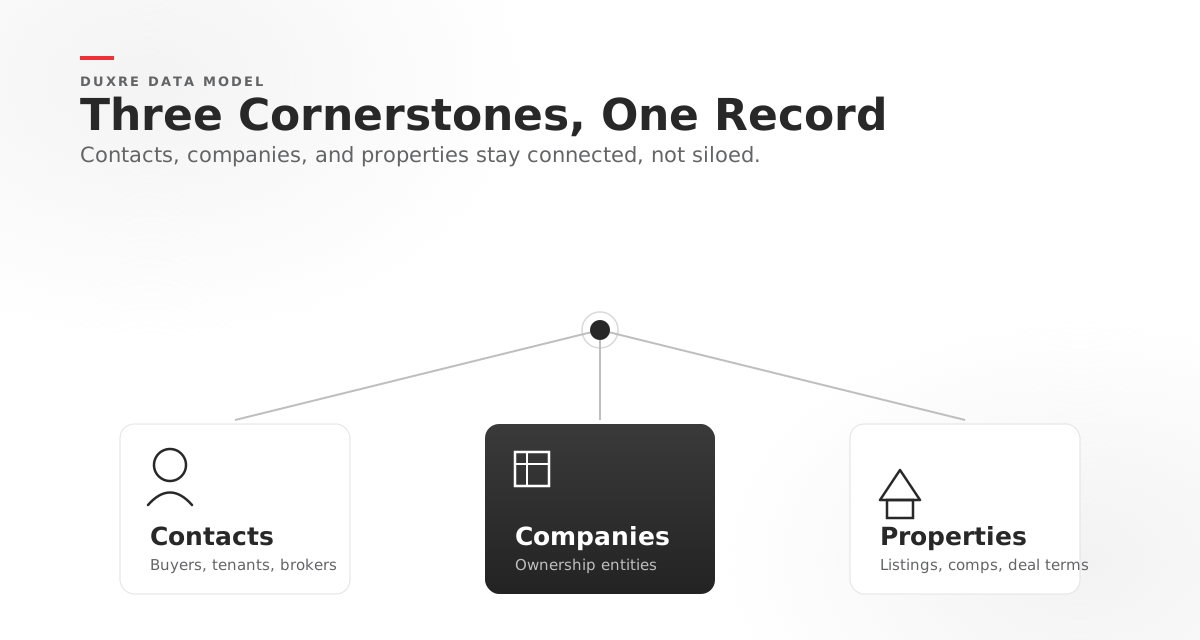
Property records and market comps get most of the attention, but they are only useful alongside two other data types: the people and the companies behind every deal. Properties, contacts, and companies function as a single connected record, not three separate lists.
On the investment sales side, that means a buyer list that stays linked to the properties they have shown interest in and the offers they have made, not a static export that goes stale the day it is downloaded. For leasing, it means a tenant requirement tied to every space that could satisfy it, and a broker relationship history that survives staff turnover instead of leaving with the departing broker's inbox.
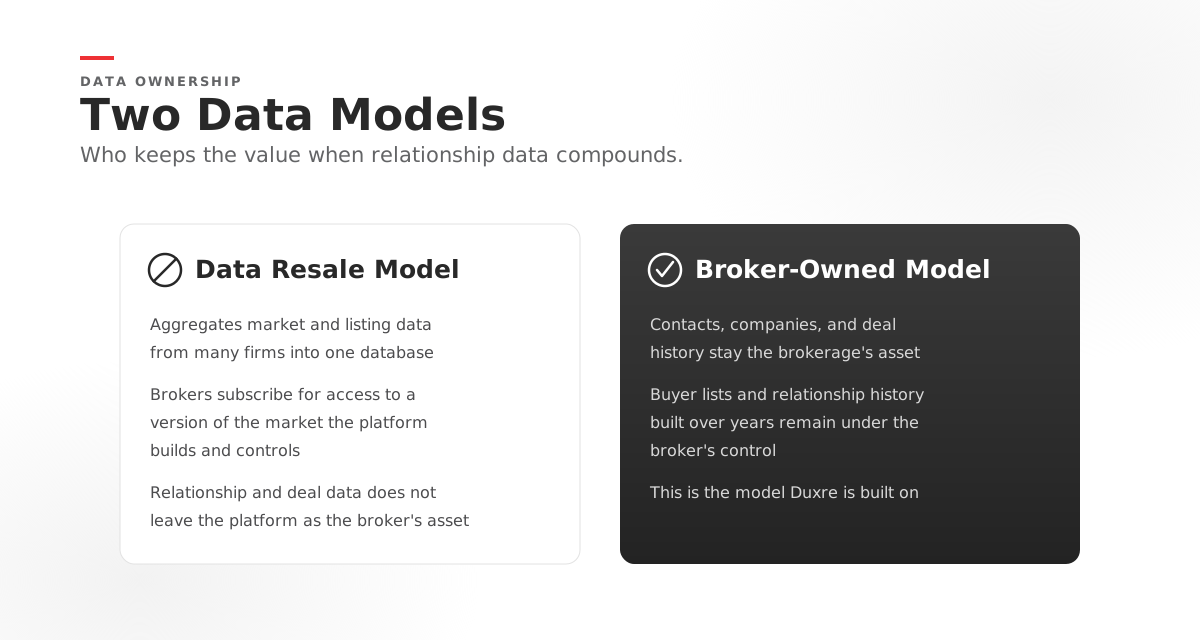
Data Resale Platforms vs. Broker-Owned Data
Most real estate data platforms fall into one of two models: they resell aggregated data back to brokers as a subscription, or they run on data the brokerage itself owns and controls. The difference matters more than most comparisons make it sound.
Platforms built on data resale, the model behind other data platforms, monetize aggregated market data and listings, and brokers pay to access a version of the market built from many firms' activity. A broker-owned model works the other way: the brokerage's contacts, deal history, and relationship data stay the brokerage's asset, not a resource the platform repackages and sells back. Duxre is built on that second model. Brokers own their data.
This is not a minor licensing detail. A buyer list built over a decade is one of a broker's most valuable assets. Whether that list lives inside a platform the broker controls, or inside a database the platform monetizes independently of the broker, determines who actually benefits when the relationship data compounds in value.
See how Duxre's real estate data platform brings together contacts, companies, properties, and AI-powered workflows in one system:
Investment Sales and Leasing Run on the Same Foundation, Different Workflows
Investment sales and leasing rely on the same core data: contacts, companies, and properties. Each follows distinct workflows that require different processes, priorities, and tools.
Investment sales work centers on buyer lists, offering materials, and long marketing processes that can run for months. The platform needs to track who has viewed an offering, who has submitted an offer, and how buyer relationships have evolved across multiple transactions. Leasing, by contrast, focuses on property availabilities, tenant requirements, tours, proposals, and renewals that often move on a faster timeline. The platform must quickly match available spaces with tenant requirements while preserving the full history of tours, proposals, and interactions within the relationship rather than leaving that information scattered across email threads.
A capital markets team at Colliers has experienced both sides of this challenge firsthand. When critical buyer or tenant relationship data exists only in an individual broker's knowledge instead of a shared platform, it creates operational risk and limits collaboration across both investment sales and leasing teams.
Where AI Fits, and Where It Does Not
AI's role in a real estate data platform is to make the existing data model faster to work with, not to replace the broker's read on a buyer, tenant, or deal. In Duxre, that layer is called Dash. It works across the data already in the system, in tools like Smart Lists for building targeted buyer or tenant lists and AI Brief for producing distribution-ready briefs with access controls, rather than operating as a standalone chatbot bolted onto the side of the platform.
What AI will not do: it will not read a room during a tour, negotiate the last point of a lease, or tell a broker which relationship is worth protecting over another. Any platform that implies otherwise is overselling the category. The data platform's job is to remove the manual work around the data so the broker has more time for the parts of the job that actually require a broker.
Where the Marketplace Fits
The Duxre marketplace extends the value of broker data beyond internal deal management by turning every listing into an active marketing asset. Broker listings published on the marketplace rank on the first page of Google for relevant property searches, allowing a listing entered once to serve both as the official deal record and as public-facing marketing. Instead of maintaining separate workflows for CRM data and listing promotion, brokers can manage both through a single platform, reducing duplicate work while increasing property visibility.
What to Look for When Evaluating a Platform in 2026
Not all real estate and property data platforms deliver the same value. Before adopting a new solution, brokerages should ask three questions to determine whether a platform will improve operations or simply add another system to manage.
-
Who owns the data once it is in the system? If a brokerage cannot export its contact database, deal history, and relationship records without losing structure or context, it does not truly own its data.
-
Does it serve both sides of the business? A platform built only for listings-heavy leasing workflows, or only for investment sales marketing, forces brokerages that handle both to maintain separate systems and manually reconcile information.
-
Is the AI layer built on top of real data? AI-powered recommendations, market insights, and content generation are only as effective as the contacts, companies, properties, and transaction history beneath them. If the underlying data model is incomplete, AI has little meaningful information to work with.
See what a broker-owned data platform looks like for your team:
FAQs
What is a real estate data platform?
A real estate data platform is a system that centralizes property, market, and relationship data so brokers can search, analyze, and act on it in one place. For commercial brokers, that includes buyer and tenant contacts, company records, property details, and deal history across sale and lease work.
What data do commercial real estate data platforms track?
Most platforms track three connected data types: properties, including listings and comparable sales or lease terms; companies, including ownership and tenant entities; and contacts, including buyers, tenants, and the relationship history tied to each. Sale and lease teams draw on the same underlying data.
How is a broker-owned data platform different from other data platforms?
Other data platforms operate on a data resale model, aggregating market data and licensing access back to brokers. A broker-owned platform keeps the brokerage's contact and deal data as its own asset rather than reselling it, which matters most for relationship data built up over years.
Do real estate data platforms work for both investment sales and leasing?
The strongest ones do. Investment sales needs a buyer list and offer tracking across long marketing processes, while leasing needs availabilities, tenant requirements, and tour history on a faster cycle. A platform that only supports one side leaves a brokerage running two disconnected systems.
What does broker-owned data actually mean?
Broker-owned data means the contacts, companies, and deal history a broker builds over years stay under that broker's control rather than becoming an asset the platform resells independently. If a broker cannot export their buyer list and relationship history intact, the data was never really theirs.
How does AI fit into a real estate data platform?
AI works best as an intelligence layer over data the brokerage already owns, surfacing patterns in buyer lists, tenant requirements, or deal history rather than operating as a separate chatbot. It speeds up the manual work around data, but it does not replace a broker's judgment on any given deal.
Can a data platform replace a broker's judgment?
No. Data platforms handle the manual work of tracking contacts, properties, and deal history, but they cannot read a room during a tour, negotiate lease terms, or judge which relationship is worth prioritizing. Brokers who expect a platform to do that work are set up for disappointment.
What should a brokerage look for when choosing a data platform in 2026?
Three things: whether the brokerage retains ownership of its contact and deal data, whether the platform supports both investment sales and leasing workflows, and whether any AI features sit on top of a real, connected data model rather than a thin database.