 Bryan Forester

Real estate data and market analysis tools are the systems brokers use to track properties, buyers, tenants, and deal activity instead of guessing at market conditions. For commercial teams, that means comps and cap rates on the investment sales side, and availabilities and tenant requirements on the leasing side, all pulled from one place instead of five spreadsheets.
Most of what gets marketed under this label was built for residential agents and appraisers. A commercial team running a buyer list of 200 contacts across an investment sale, or tracking a dozen live tenant requirements against a rent roll, needs something built around deal activity, not home value estimates.
This piece covers what real estate data and market analysis actually mean in a commercial context, the tool categories worth knowing, where most teams lose time and accuracy, and how a broker-owned data model changes the picture.
See how the Duxre platform organizes contacts, companies, and properties in one system.
What Counts as Real Estate Data and Market Analysis in Commercial Real Estate?
Real estate data and market analysis in a commercial context means the property, contact, and transaction information a broker uses to price a listing, build a buyer or tenant list, and track a deal from first call to close. It is not a single report. It is the combination of comps, ownership and contact records, and activity history a team pulls together before making a recommendation.
On the investment sales side, that includes sale comps, cap rates, rent rolls, and a buyer universe segmented by asset type and check size. On the leasing side, it includes availabilities, tenant requirements, lease comps, and landlord or tenant rep contact history. Both sides depend on the same underlying data model: who the people are, what companies they represent, and which properties are in play.
Geographic and spatial context matters on both sides too. A broker sizing up a submarket for an industrial listing or scouting alternative spaces for a tenant needs to see where deals are actually happening, not just a table of addresses.
Why Real Estate Insights Matter for Investment Sales and Leasing Teams
Real estate insights matter because they replace guesswork with evidence at the moment a broker is making a call: what to list a property at, which buyers or tenants to call first, and when a deal is likely to move. The value is the same on both sides of the business, even though the questions look different.
For an investment sales team, insight means knowing which buyers have been active in a given asset class recently, what similar properties have traded for, and which relationships in the CRM have gone quiet and need a nudge. For a leasing team, it means knowing which tenants in the pipeline match an availability, how a space compares to nearby competing listings, and which landlord contacts need an update before a renewal conversation stalls.
In both cases, the broker's judgment does the actual work. The data narrows the field and surfaces what would otherwise take hours of manual digging through old emails and spreadsheet versions.
Key Types of Data Brokers Actually Track
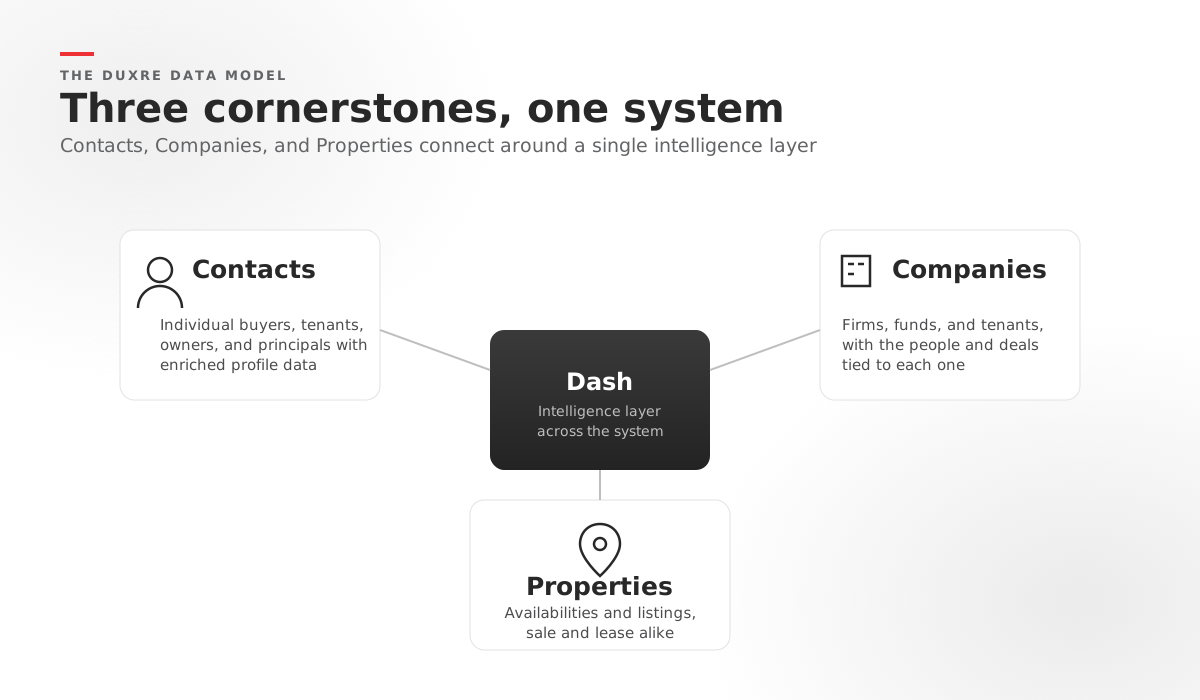
The data that matters in commercial real estate breaks down into three connected categories: contacts, companies, and properties. Every other data type, comps, activity history, enrichment, sits on top of these three.
Contacts are the individual buyers, tenants, owners, brokers, and principals a team works with. A useful contact record holds more than a name and email. It should reflect deal history, communication activity, and how a person is connected to the companies and properties around them.
Companies are the firms, funds, and tenant organizations behind those individuals. Linking a contact to their company surfaces relationships a broker would otherwise have to remember manually, like which fund just closed a raise or which tenant is expanding into a new market.
Properties cover both sides of the business: investment sale listings and leasing availabilities alike, along with the comps, rent rolls, and history tied to each one.
Layered on top of that foundation:
-
Sale comps and cap rate data for pricing investment opportunities
-
Lease comps and rent trends for leasing recommendations
-
Ownership and entity records for identifying who actually controls a property
-
Geographic and submarket data for spotting where activity is concentrated
-
Engagement data, such as who opened an offering memorandum or clicked into a listing email, for knowing where to focus follow-up
Market Research Tools Every CRE Team Should Know
Market research tools in commercial real estate exist to answer one question quickly: how does this property or deal compare to what else is happening in the market right now. The right tool depends on which side of the business is asking.
For pricing an investment sale listing, a comp set built from recent trades of similar assets does the job a residential comparative market analysis does for a house, adjusted for asset class, cap rate environment, and buyer pool. For leasing, the equivalent is a set of comparable availabilities and recent lease transactions in the submarket, used to defend an asking rent or counter a tenant's pushback.
Demographic and economic indicator tools round this out on both sides. Population and employment trends inform where retail and multifamily investment activity is heading. The same data tells a leasing broker which submarkets are drawing tenant demand.
Teams researching a market should be pulling from:
-
Comparable sale and lease transaction data
-
Demographic and employment indicators for the submarket
-
Ownership and entity records to identify counterparties
-
Historical listing and closing activity for the asset class
Legacy CRE Data Platforms and the Data Ownership Problem
The dominant real estate data platforms built their businesses on aggregating listing and property data and licensing access back to brokers. That model works for discovery. It creates a structural problem for the broker's own book of business: the relationship data, the buyer list, the tenant contact history, lives inside a platform the broker does not control and cannot take with them.
Duxre is built on broker-owned data instead. Contacts, deal history, and engagement data stay with the team, not a third-party database.
Broker listings on the Duxre marketplace also rank on the first page of Google for their property searches, so the discovery upside of a listing platform does not require giving up ownership of the underlying data to get it.
Investment Analysis: Turning Data Into a Pricing and Positioning Decision
Investment analysis tools take raw property and market data and turn it into a defensible number, whether that number is an asking price, an offer, or a rent recommendation. On the sale side, that means cash flow projections, cap rate analysis, and return calculations. On the lease side, it means comparing effective rent, concessions, and term across competing spaces.
None of this replaces the broker's read on the deal. A cap rate model does not know that a buyer is under pressure to close before year-end, and a lease comp set does not know that a landlord is more motivated than the asking rent suggests. What these tools do is remove the manual work of pulling comps and running numbers, so the broker's time goes toward the judgment calls that actually move a deal.
Where Duxre fits in this picture is upstream of the financial modeling: keeping the buyer list, the tenant pipeline, and the property and comp data organized and current, so whatever analysis tool a team uses is working from clean information instead of three conflicting spreadsheet versions.
Best Practices for Using Real Estate Analytics Across a Sale and Lease Pipeline
Getting value out of real estate analytics starts with fixing the data before adding another tool on top of it. A team layering a new analytics platform onto contact lists that are already out of date or duplicated across spreadsheets will just get faster wrong answers.
A few practices apply regardless of which tools a team uses:
-
Keep contact, company, and property records in one system instead of splitting them across a CRM, a spreadsheet, and email threads
-
Track engagement, not just contact information, so follow-up goes to the buyers and tenants who actually opened the last offering memorandum or availability flyer
-
Review and prune the data on a set cadence instead of letting stale contacts and closed listings accumulate
-
Make sure both the investment sales and leasing sides of the business are working from the same underlying records when a property or contact touches both
Where Real Estate Data Analysis Breaks Down
The most common failure in real estate data analysis is not a lack of tools. It is fragmentation: the buyer list lives in one spreadsheet, the tenant pipeline in another, and the comp data in a folder nobody has opened in six months. By the time a broker needs an answer, the data has forked into versions that disagree with each other.
Accuracy is the second failure point. Contact information goes stale, companies get acquired, and a rent roll pulled from a listing six months ago no longer reflects a property's actual occupancy. Analysis built on outdated inputs produces confident, wrong conclusions.
Privacy and data handling matter here too, particularly for offering materials and confidential financials that should never end up in an open inbox or a shared drive without access controls.
How Duxre Puts Real Estate Data to Work
Duxre organizes contacts, companies, and properties as one connected data model instead of three disconnected systems, so a buyer list, a tenant pipeline, and a property's comp history stay consistent across the team.
CRM Intelligence and contact and company enrichment keep records current without manual upkeep. Smart Lists let a team segment buyers or tenants by the criteria that actually matter for a deal, instead of scrolling a flat spreadsheet. Email Engine adds engagement data on top of that, showing which contacts opened, clicked, or went cold, so follow-up is based on actual behavior instead of a hunch.
Across all of it, Dash works as the intelligence layer that surfaces what the data means, not a separate chatbot bolted onto the side of the platform. The goal is the same on both sides of the business: a broker who can trust the data enough to act on it fast.
FAQs
What is real estate data and market analysis in commercial real estate?
Real estate data and market analysis is the process of using property, contact, and transaction data to price listings, build buyer or tenant lists, and track deals. It includes investment sales analysis using comparable sales (comps) and cap rates, as well as leasing analysis using property availabilities and lease comps.
What data should an investment sales broker track?
Sale comps, cap rates, ownership and entity records, and a segmented buyer list tied to deal history. The goal is knowing which buyers are active in a given asset class and which relationships need attention before a listing goes to market.
What data should a leasing broker track?
Availabilities, tenant requirements, lease comps, and landlord or tenant rep contact history. Matching a live requirement to the right space, defending an asking rent against a comp set, and knowing which contacts need an update before a renewal conversation stalls all depend on current, connected data.
How is commercial real estate data different from residential tools?
Residential tools center on home value estimates built for individual buyers and sellers. Commercial data centers on comps by asset class, buyer and tenant pipelines segmented by deal criteria like check size or square footage, and property data that spans both sale listings and leasing availabilities in one system.
Can AI improve real estate market analysis?
AI can help surface patterns in existing data faster, such as which contacts are going cold, which properties match a tenant requirement, or which comps a pricing recommendation should weigh most heavily. It does not replace a broker's read on motivation, timing, or relationship context in a live deal.
What tools help a team organize a buyer or tenant list?
CRM Intelligence and Smart Lists keep contacts, companies, and properties connected and segmented by the criteria that matter for a specific deal, such as asset type, check size, or a tenant's space requirement, instead of scrolling a flat, disconnected spreadsheet that goes stale within weeks.
See how Duxre organizes your buyer lists, tenant pipeline, and property data in one place.